
Estimated reading time: 4 minute(s)
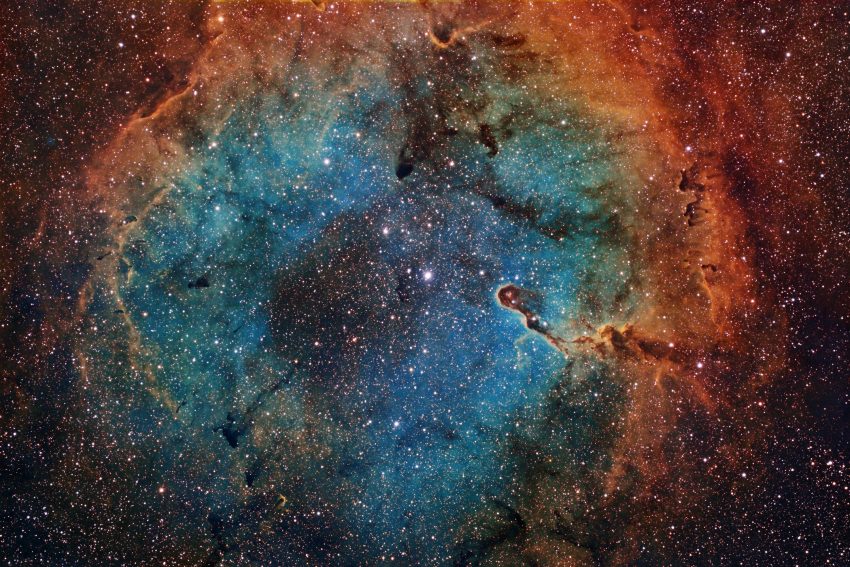
As long as I can remember, I have loved the sky.
It spawned a love for astronomy. I had books that I would read and re-read. I loved any and all space-themed documentaries. My parents gave me a telescope one Christmas, and in our rural back yard I was able to see some small bit of the wonders of Jupiter, Saturn, Venus, and Mars. I was thrilled as a college freshman when I discovered I could even take a class on astronomy! It was great, just missing more real interaction with space. (I did not get to go there…)
I know I am not alone in this.
The heavens declare the glory of God;
the skies proclaim the work of his hands.
Day after day they pour forth speech;
night after night they reveal knowledge.
They have no speech, they use no words;
no sound is heard from them.
Yet their voice goes out into all the earth,
their words to the ends of the world.
In the heavens God has pitched a tent for the sun.
It is like a bridegroom coming out of his chamber,
like a champion rejoicing to run his course.
It rises at one end of the heavens
and makes its circuit to the other;
nothing is deprived of its warmth.
We all are awed by the heavens. Everyone loves a good sunset, or a sunrise. Or a rainbow! Or even a powerful storm with billowing, swirling clouds. (Not too swirly—tornados are not fun!)
Brief aside: I am enjoying the book Divine Conspiracy by Dallas Willard, and in that book he uses the Sermon on the Mount (he calls it the Discourse on the Hill) to understand the Kingdom of God that Jesus wanted to reveal to us. When Jesus used the phrase, “Kingdom of heaven”, it was more accurately the plural word, “heavens”. The word Jesus used could refer to three kinds of “heaven”: the farthest was the sky I am talking about here, far above and beyond with sun, moon, and stars. Then there was the nearer sky, where clouds are and weather events begin. Then there is the air immediately around us, where we breathe and exist. All three have different words in English (sky, air, heavens) but the word Jesus used (tou ouranou) when used in the context of the kingdom of heaven could be more appropriately translated the Kingdom of the Heavens, with the heavens being the air that is all around us and that we breathe inside of us. That is how omnipresent and how close the kingdom of his Father is to us.
I wonder, if that is not also what David meant in his words in Psalm 19? Everything around us declares Gods greatness! But, I think he meant the far away heavens, and in this post, so do I.
You probably followed along with everyone else the return of NASA to the moon. We were all thrilled with the idea of the heavens (space, sky) during those weeks. And in the near future, NASA hopes to send people to Mars.1 Imagine!
We all are thrilled by the sky, at least at moments.
It seems to me that the grandeur of the heavens can’t help but put us in a state of awe of their creator. Our creator. My daughter loves the sky, too (especially clouds), and I know there are more of us Sky Lovers. I wish that everyone could be so captivated by the marvels above them on a more regular basis, only that it might have the effect of arresting our often frantic lives and giving us a chance to breathe, to be awed, to wonder, to marvel—all these things, I think, fill us with the life of the Eternal One.
And there is life in no other, despite how distracted we can become from that truth.
There are certainly other things that remind us of him, but, along with David, I wanted to recognize today the glory of God declared by his heavens.
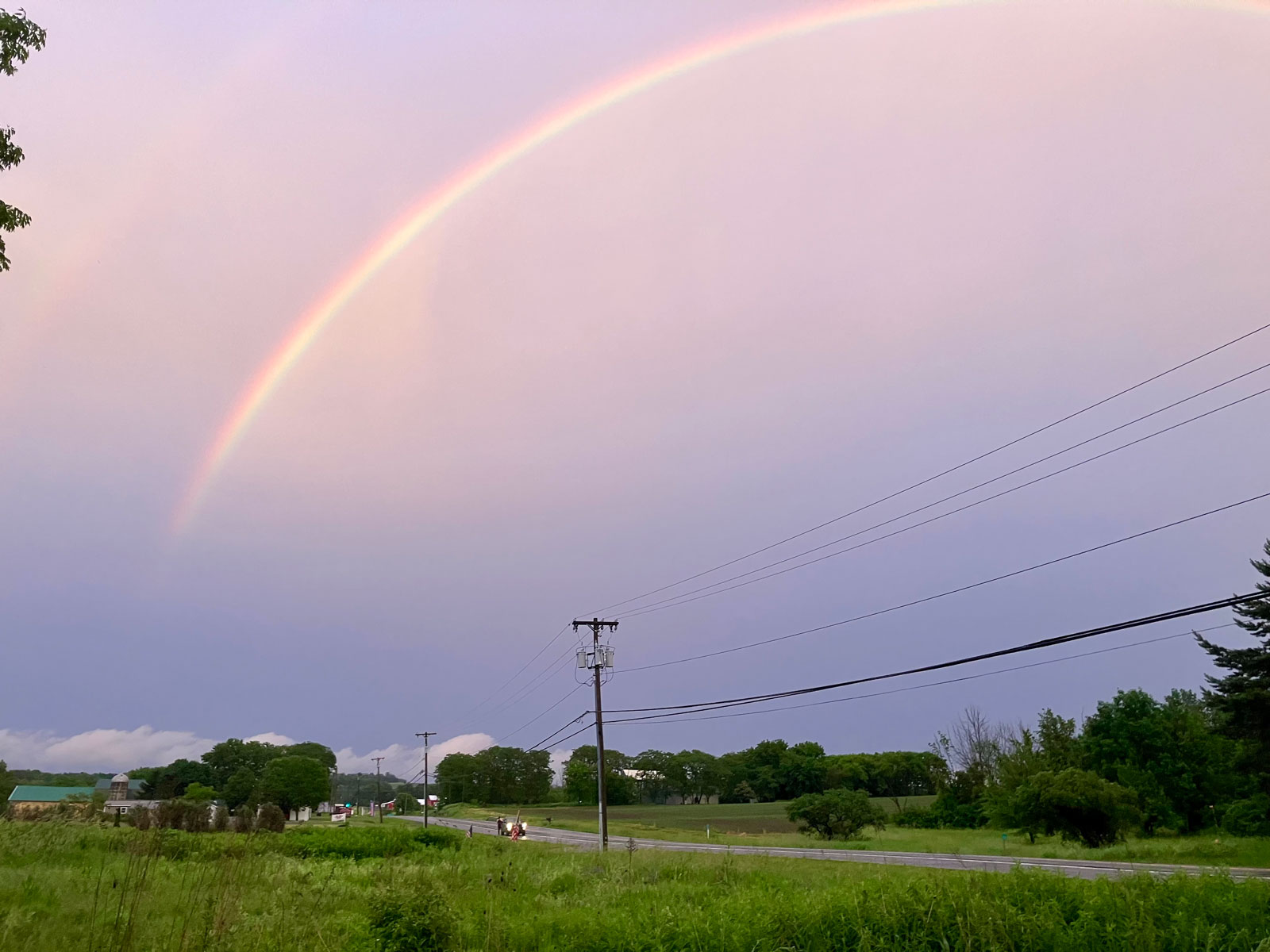
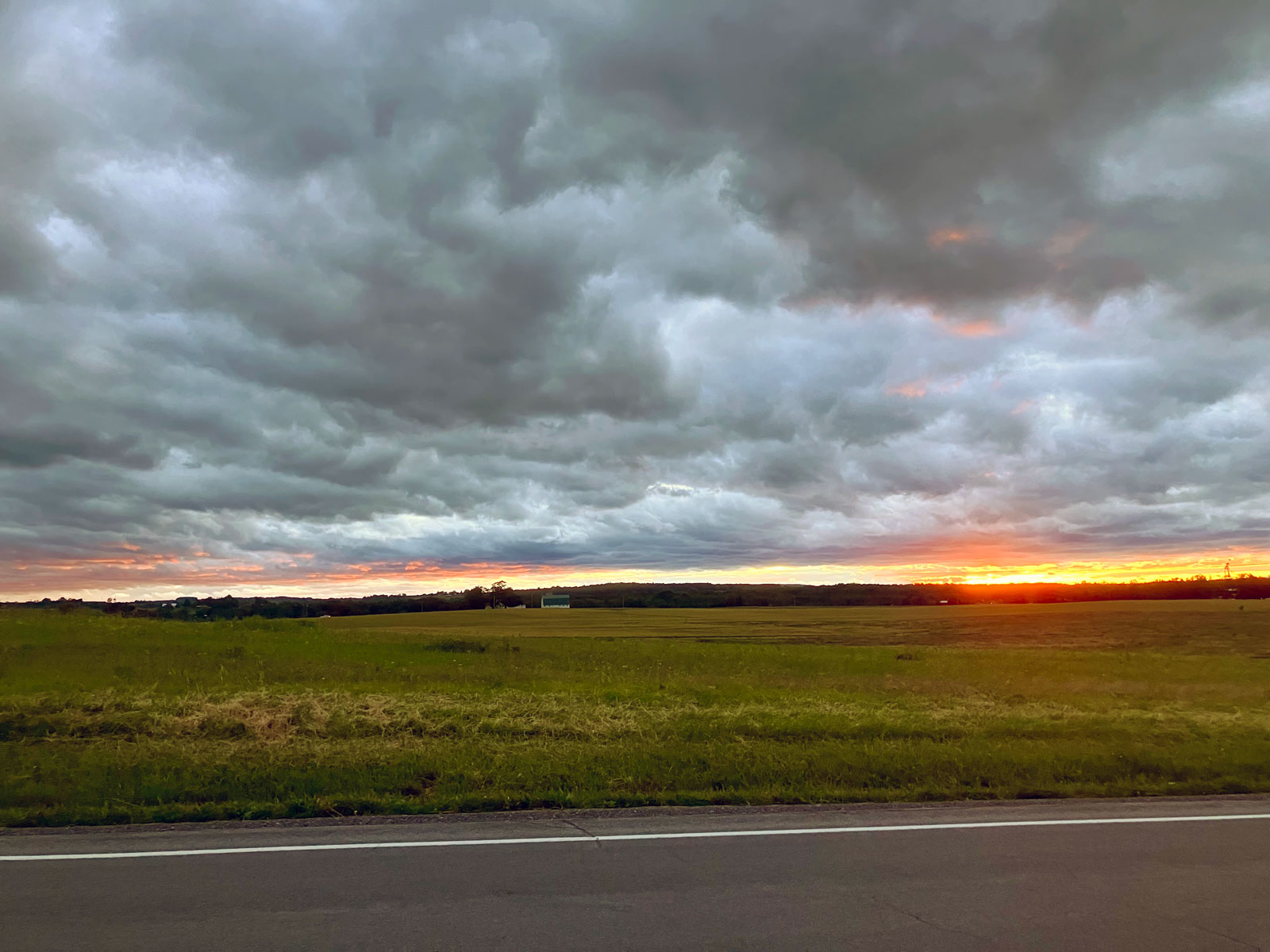
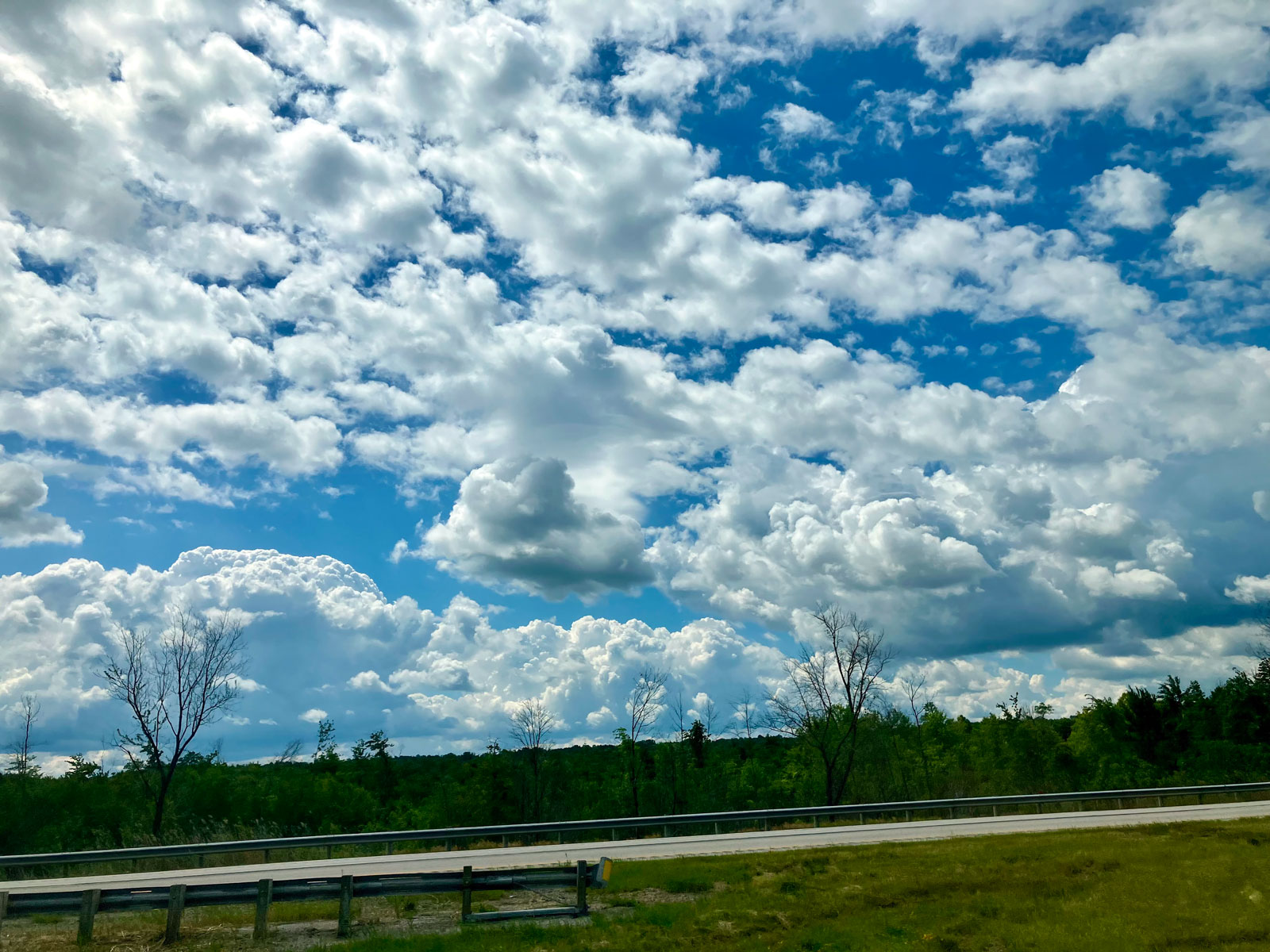
Not that they compare to the real thing, but here are some photos of skies I’ve recently seen:

And, if you have time, enjoy a listen to this song I wrote over three decades ago, inspired by Psalm 19 and the skies.
- The Artemis program (https://www.nasa.gov/humans-in-space/artemis/) is responsible for both programs, sending people to the Moon and to Mars. ↩